
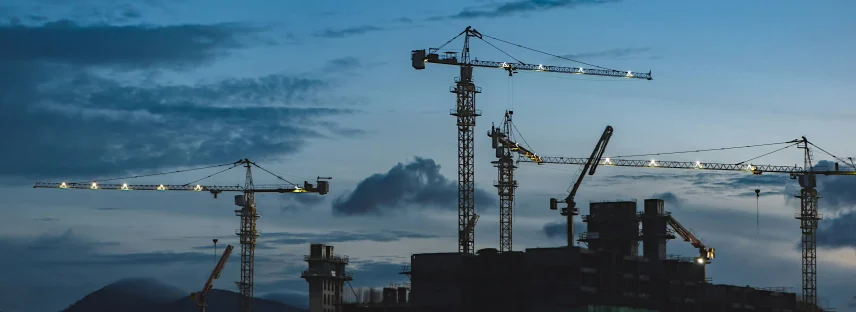
Construction & PropTech Software Development
This is the work we would most like to be judged on, and the part of our portfolio that has been hardest to show.
Construction runs on data that was never designed to be queried. Building models exist to be drawn and coordinated, not to answer questions about quantities or sequence. The information a planner needs is genuinely in there, and getting it out in a form software can use is a specialist problem most agencies will not take on.
We have done exactly that: pulling structured quantity and schedule data out of building models and turning it into a platform that answers questions. The planning product it sits behind is used by some of the largest contractors and architecture practices in the industry.
What We Build
Not every product needs all of this. These are the parts we go deep on when one calls for them.
-
Planning and scheduling platforms
Programme, sequence, dependencies and critical path. Software where time is a primary axis rather than a column, and where the schedule is a live model rather than a document someone exports on Fridays.
-
Model data extraction
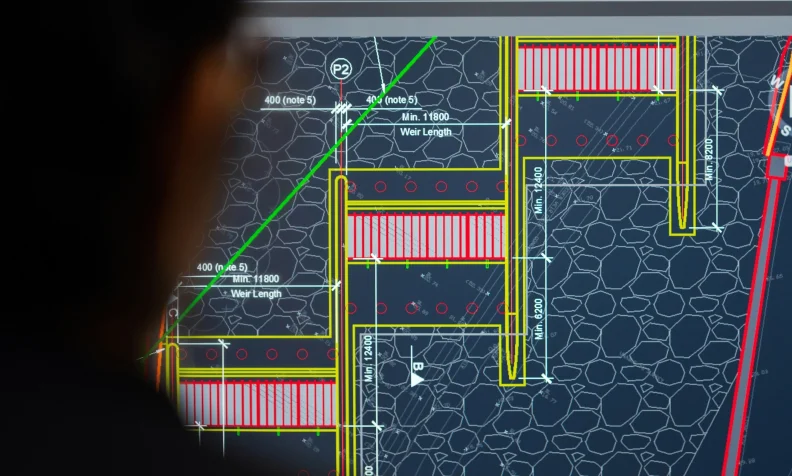
Reading proprietary and industry model formats and getting structured data out of them — quantities, elements, properties, sequence. Large files, no convenient export, and specifications that are either absent or theoretical. This is the capability the rest of it depends on.
-
4D scheduling interfaces
Joining the model to the programme so the build can be seen in time. Timeline views that stay legible at a week and at two years, with zoom levels, dependencies and overlap handled deliberately. See dashboard and data visualisation design.
-
Field and site applications
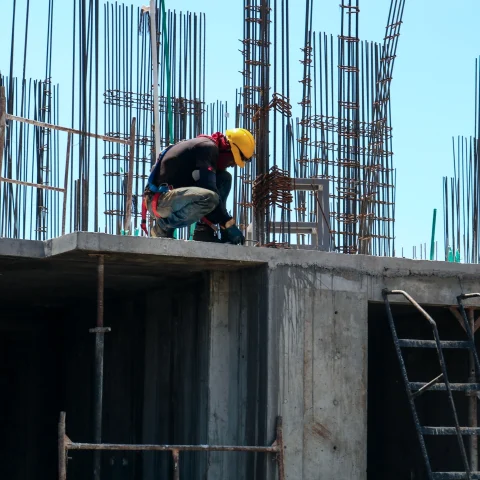
The half used on site rather than in the office. Designed for a device held in a glove, in sunlight, by someone who will not have a connection for the next four hours.
-
Coordination and document control
Versions, revisions, approvals, and an audit trail of who issued what and when. In an industry where the paper trail has contractual weight, this is not a convenience feature.
-
Reporting and dashboards
Progress against programme, quantities against budget, and the operational screens somebody watches all day. Dense data made legible rather than summarised into uselessness.
-
Integration across the toolchain
Nobody in a project uses the same software, and most of it was not built to be integrated with. We build the translation layers. See data engineering and integrations.
-
PropTech platforms
The other half of this sector: portfolio, asset and tenancy software, where the data is commercial rather than geometric but the integration problem is the same shape.
What is
Different About
Building Here
Four things that are not true of most software and are true of all of this.
-
The data is in formats built for drawing, not asking
A building model is a coordination tool. It holds everything a planner needs and surrenders almost none of it willingly: proprietary formats, enormous files, specifications that are partial or paid-for, and exports that lose exactly the structure you came for. Every useful product in this sector is built on top of somebody having solved that first. We treat extraction as its own piece of engineering with its own feasibility stage, because quoting it blind is guessing.
-
There is no connection on a site
Not a weak connection. None, for hours, inside a structure made of concrete and steel. Offline is not a resilience feature here, it is the operating condition, which means a real local data layer, a sync queue, and server-side authority over the conflicts that follow when two people have been working apart all morning.
-
Time is a dimension, not a date column
A programme is a dependency graph with a critical path, not a list of start dates. Change one duration and the consequences propagate. Software that models this as dates in a table cannot answer the question anyone actually has, which is what moves if this slips.
-
The consequences are physical
A wrong number in most software produces a wrong report. A wrong number here produces a pour that has to come out, a delivery that arrives in the wrong week, or a claim. That changes how much validation belongs in the product, how visible uncertainty has to be, and how carefully a screen has to distinguish a figure that is measured from one that is estimated.
Do You Have a Project Idea?
Selected Work
- Planit. Construction planning and scheduling platform. We extract structured quantity and schedule data out of building models and turn it into something the platform can query, which is the work behind its 4D scheduling. The product is used by some of the largest contractors and architecture practices in the industry.
What We
Bring To it
An industry is not a service. These are the services this work is usually made of.
- Data Engineering and Integrations — extraction, pipelines and the translation layers between tools
- Backend and API Development — the data model and the services on top of it
- Dashboard and Data Visualisation — making dense programme and quantity data readable
- Web App Development — the platform the office uses
- Mobile App Development — the offline-first half that goes to site
- Desktop App Development — where model files are too large to move and the work has to happen locally
How We
Work Together
-
Feasibility study
For anything involving model formats or an unfamiliar data source, a short fixed engagement against your real files, ending in a written answer about what can be extracted and how. The sensible first step here more than anywhere else we work. -
Fixed scope
A defined build, priced per module, with a timeline, once feasibility is settled. -
Ongoing team
Developers, QA and design working to your roadmap. Suits platforms that grow with the projects they serve. -
Support retainer
Every project includes one month of bug fixing after launch at no extra cost. After that, ongoing work runs as a support retainer with agreed response times.We price every project individually. There are no packages, because the work does not arrive in packages.
Questions We
Get Asked
-
Usually, and it deserves a feasibility study rather than a guess. We work against your real files for a fixed price and tell you honestly what is reachable, what is lossy and what is not there at all, before anyone commits to a build. An estimate written before someone has opened the actual files is not an estimate.
-
We handle formats case by case, which is most of the skill in this work. Open exchange formats are more tractable; vendor formats vary enormously and some lose the structure that makes them useful. The feasibility stage exists to establish which you are dealing with.
-
That is designed in from the start rather than added later. A real local database, a sync queue that is safe to re-run, and agreed rules for whose version wins when two people have been working offline. We will ask early how long the longest realistic disconnection is, because it changes the design.
-
Usually. Nobody in a construction project uses the same software, and much of it was not built to be integrated with, so we scope that work separately rather than folding it into an estimate and discovering it later.
-
Yes, starting with an audit. Products in this sector often have years of accumulated model-handling code that only one person understood. See project takeover and modernisation.
-
We give you a rough estimate as soon as we understand the data and what the platform has to do with it. The detailed number comes after the scope is agreed, broken into modules and priced individually, so you can see what extraction, a timeline interface or an integration actually costs and decide what belongs in version one.